Search engines use bots to crawl websites. If your site is well-structured, it makes it easier for these bots to navigate and index your pages.
This is crucial for eCommerce sites with many product pages.
Page speed is a ranking factor. A faster site leads to better user experience, which can reduce bounce rates and increase conversion rates.
For eCommerce, where every second counts, optimizing speed is vital.
Implementing structured data (schema markup) helps search engines understand the context of your products.
This can enhance search results with rich snippets, like star ratings and price information, potentially increasing click-through rates.
Clean, descriptive URLs improve both user experience and crawlability.
An optimized URL structure makes it easier for search engines and users to understand what a page is about.
eCommerce sites often have duplicate content (e.g., multiple URLs for the same product).
Canonical tags help indicate the preferred version of a page, preventing issues with duplicate content that can hurt rankings.
Regularly monitoring for crawl errors (like 404 pages) and fixing them can prevent losing potential customers and improve the overall SEO health of the site.
In March 2024, Google introduced a series of AI-driven algorithm changes that radically changed how websites are indexed, crawled and viewed in search engine result listings.
In response of Google Generative Search Experience (GSE), Google AI Overviews, and MSN Bing CoPilot — our technical search engine optimization strategy addresses 184 on-page and off-page SEO elements.
Here are some strategies to adapt and thrive in this new environment:

An intelligent SEO strategy starts with producing an SEO content strategy template. This template best articulates your brand, products and services that you bring to a target audience, and unique selling points and a value proposition.
We eliminate guesswork by producing site content based on actual user behavior and proven effective high value keywords and search phrases.
We are ever-mindful of the need to convert a high percentage of website visitors into customers.
Conversion Optimization Analysis & Customer Journey Tracking
A conversion funnel analysis tracks user actions and behavior during website visits. You receiving a visual perspective of the steps a customer takes (i.e. the journey) that leads a site visitor towards a purchase, a lead capture form.

We scan your entire website from the root domain to sub-domains.
Our technical audit inspects and repairs the following ;


Using proprietary search engine analysis tools, competitive intelligence research, and cross-references against the most relevant search term used by web searchers — we’ll use the results of that data to develop the ideal set of keyword phrases to promote your website.
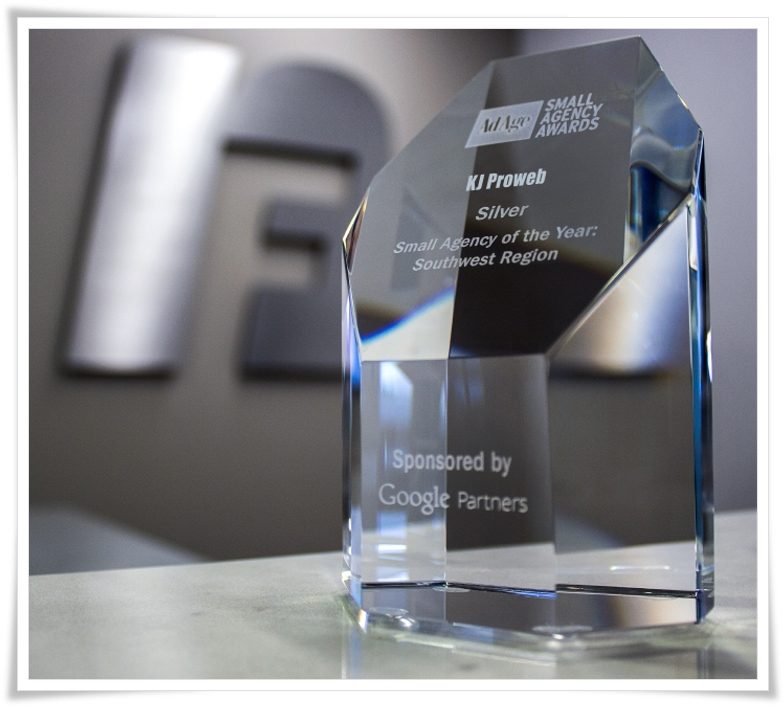
In 2014, KJ Proweb distinguished itself from among 2,000+ Google Engage Agency (Partners) winning second place, a silver award in Google’s annual ‘Best Small Agency competition.
Winners were featured in the August 2014 edition of Ad Ageâ„¢ magazine.